Santa Barbara Museum of Art ,
Jul 12, 2003 - Oct 19, 2003
Santa Barbara, CA, USA
The Art of Gunther Gerzso
by means of Press Release
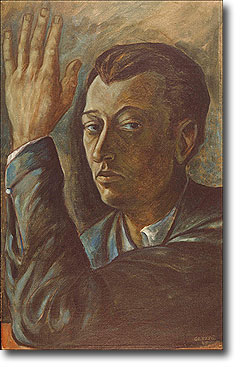
Gunther Gerzso. Rumor has it that he is our best abstract painter. That is quite true, but it is not the whole story: he is one of the great Latin American painters.çççççOctavio Paz, 1963 April 28, 2003 ç The Santa Barbara Museum of Art (SBMA) presents the first major exhibition in thirty years of the art of Mexico’s premier abstract painter, Gunther Gerzso (1915-2000), on view July 12 ç October 19, 2003. Risking the Abstract: Mexican Modernism and the Art of Gunther Gerzso gathers 130 of the best examples of the artist’s paintings and works-on-paper drawn from both private and institutional collections across the United States, Mexico, and Europe. Some of these works have never before been exhibited, while others represent hallmarks of an extraordinary career. Far more than a retrospective, the exhibition examines the internationalization of art and culture and the related development of abstraction in Mexico in the post-World War II period. Risking the Abstract is curated by the SBMA’s Curator of Modern and Contemporary Art, Diana C. du Pont, and organized in cooperation with the Consejo Nacional para la Cultura y las Artes, through the Instituto Nacional de Bellas Artes and the Museo de Arte Moderno, Mexico. After its Santa Barbara premiere, the exhibition will proceed on an international tour to the Museo de Arte Moderno in Mexico City and The Mexican Fine Arts Center Museum in Chicago. Risking the Abstract is accompanied by a major publication with groundbreaking scholarship by leading authorities on modern Mexican art Luis-Martín Lozano, Cuauhtémoc Medina, and Eduardo de la Vega Alfaro. Major themes of the exhibition include Gerzso’s affiliation with the Surrealist exiles in Mexico; his fascination with Mexico’s ancient civilizations which led him to redefine indigenismo, or the emphasis on Mexico’s native art and culture; his deep connection to Abstract Expressionism; and the risk Gerzso took by devoting himself to abstraction when Muralism was still predominant in Mexican art. "Gerzso's work represents a new direction in Mexican painting at the mid-twentieth century," said Curator Diana du Pont. "A pioneering form of abstraction, it proves that Surrealism in exile in Mexico was as crucial to the development of Gerzso's painting as it was for the New York Abstract Expressionists. His paintings exemplify the shift inward among international vanguard artists like Adolph Gottlieb, Jackson Pollock, Barnett Newman, and Mark Rothko to a new focus on the self and on myth, psychoanalysis, and indigenous art of the Americas." Creating a personal and poetic style of abstraction rooted in nature, architecture, and the human figure, Gerzso articulated a new direction in modern Latin American art. Looking beyond the socially committed and dramatically expressive mural painting of Los Tres Grandes (The Three Great Ones), Diego Rivera, David Alfaro Siqueiros, and José Clemente Orozco, he embraced a fresh spirit of internationalism and a firm commitment to the poetic possibilities of formalism.
|