|
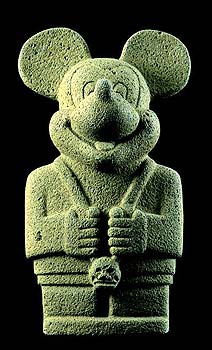
LatinArt: How did you first become interested in incorporating popular/folk elements into your work? Ospina: The insertion of popular elements in my work arise in the first instance from the insoslayable and definitive presence of traditional and popular art manifestations in my country, rich in a pre-Columbian heritage that is recognized and important in the American context. This fortunate circumstance brings with it a series of contemporary cultural phenomena that illustrate other facets of the matter. For example, the illegal traffic of pre-Columbian works from Colombia that constitutes one of the worst contemporary pillages of archaeological objects, or the production of forgeries in order to satisfy a market of historical reliquaries. Beyond the aesthetic admiration and archaeological interest that I have for these pieces of unquestionable value, that which really interests me are manifestations such as grave digging and forgeries that reveal contemporary cultural and social phenomena: mechanisms of surviving in the midst of misery, abuses of power and corruption that permit the external flow of pieces, simulations and tricks to fool tourists desperate for cultural souvenirs, pillage and depredation on the part of collectors and international institutions, a loss of the patrimony and identity of a society that is replaced by the most mediated consumer goods. LatinArt: What is your opinion about how our notion of what is “high” and “low” art has now become more ambiguous and increasingly interchangeable than in the past? Ospina: The boundaries between fine art and popular art have definitely been broken, nevertheless, everybody knows when something is a work of art, and something else a handicraft. The art world has appropriated, without any spiritual shame, the techniques and procedures of popular art in order to create art. In terms of operative expansion, the enrichment of contemporary art at the expense of popular art cannot be compared to the fact that traditional manifestations would today be better demonstrated, dramatized, illuminated, or registered. And this is very natural since we are living in our own time. Now then, what will last of all this? This is the question that is being asked of the future by forecasters. For the moment, the only corroborative is the phagocytosis of tradition by contemporary art and culture. LatinArt: How will these changes continue to affect the future of contemporary art in Latin America, a region with a long tradition (both past and present) of popular/folk art? Ospina: The artists of this new generation in Latin America see their tradition and the popular as a the price of a house that goes up and down, or as a garment to be torn and re-sewn. I don’t believe that modernity’s admiring look towards the historic past would be sustainable. There is too much disbelief and cynicism in the new looks to hope for a resurgence of romanticism. This is in a certain way healthy, since it is generating a culture more self-critical and realistic – very disenchanted, but more realistic – in accordance with the spirit of the age in which we live; an age of a new culture under construction.
|